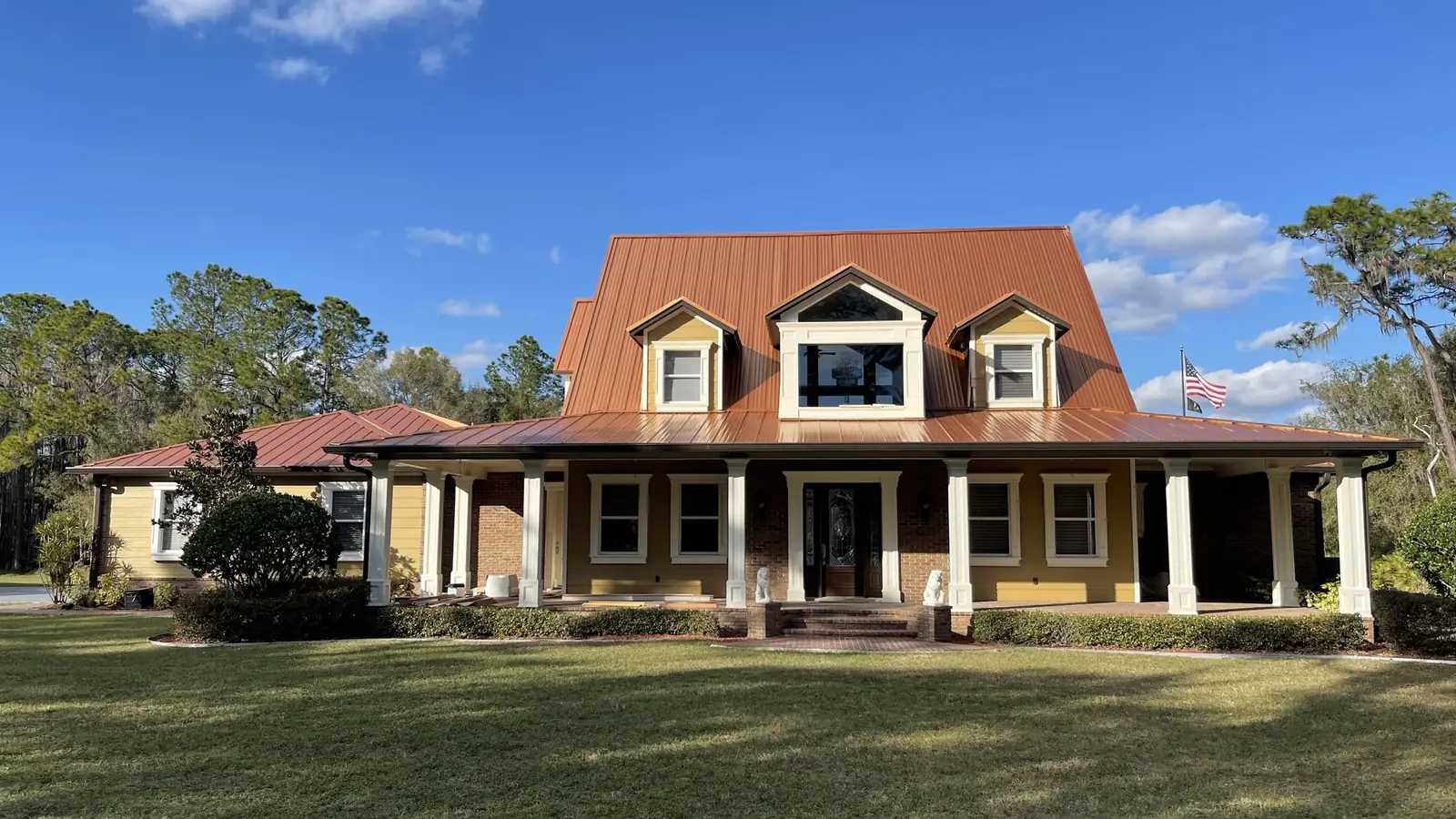
custom home building
Building a Custom Home on Acreage in Lithia, FL
What building on Lithia acreage actually involves: Hillsborough agricultural zoning, well and septic siting, grand oak rules, driveway permits, and inland wind loads.
Building a custom home on Lithia acreage is a land project before it is a house project. The parcel's zoning district, its soil, its water table, and its oaks will settle most of the questions people expect to answer with a floor plan, and they settle them before a single wall goes on paper. Lithia sits at the southeastern corner of Hillsborough County, along the Alafia River, in a stretch of agricultural and rural residential land that has nothing structurally in common with the master-planned density of FishHawk Ranch a few miles up the road. Carapezza has built across Hillsborough County from a Plant City base since 1989, and on rural land the early work is where a build is won or lost.
Lithia and FishHawk Are Two Different Building Problems
People search for both in the same breath, so it is worth separating them. FishHawk Ranch is a deed-restricted master-planned community with an HOA architectural review, a community development district, and lots sized for a subdivision. Custom work there usually means renovation, an addition, or an infill rebuild inside the community's rules. Greater Lithia, beyond those gates, is rural: multi-acre and equestrian parcels, no HOA on most of them, county zoning and utilities instead. Our FishHawk and Lithia service page covers both. This one is about the acreage.
Zoning Decides More Than You'd Think
Hillsborough County's Land Development Code sorts rural land into several agricultural districts, and the letters on your parcel are not cosmetic. AS-1 and ASC-1 permit single-family homes in a rural environment on lots of at least one acre. AS-0.4 drops the density further with a 2.5-acre minimum. AR is the working-agriculture district, written to keep viable farmland from being nibbled apart by subdivision, and it expects parcels of 20 acres or more.
What that district controls: your setbacks from every property line, the height you can build to, whether the parcel can ever be split, and whether outbuildings like a barn, an arena, or a detached workshop are permitted by right or need a separate approval. If your plan includes horses or equipment storage, confirm the district before you fall in love with the land. Rezoning is possible in some cases. It is also months of process, and it is not guaranteed.
Well and Septic Set the House Location
This is the section that surprises people, and it is the one worth reading twice. Most rural Lithia acreage is off county water and sewer, which means a private well and an onsite sewage treatment and disposal system. Neither is an afterthought bolted onto a building permit. Both are separate permitting tracks with their own timelines, and together they dictate where on the parcel the house can physically sit.
The septic side runs through the Florida Department of Health in Hillsborough County, which handles onsite sewage permitting locally under the state program that moved to the Florida Department of Environmental Protection in 2021. Before a permit is issued, a site evaluation puts a soil profile and a percolation reading on paper and establishes the seasonal high water table. Central Florida's wet season lifts that table considerably, and a drainfield has to sit a required distance above it. On a flat parcel with a high table, the buildable envelope can end up much smaller than the acreage suggests, and the drainfield's required separation from the well, the property lines, and any surface water narrows it further.
The well is its own permit. Water well construction inside the Southwest Florida Water Management District requires a construction permit before drilling, and depth and yield vary across this part of the county. Water quality varies too; sulfur and hardness are common enough here that treatment is a design assumption rather than a surprise.
Sequence matters. Get the soil evaluation done, find the septic envelope, then site the house. Doing it the other way around means redrawing plans you already paid for.
The Oaks Get a Vote
The canopy is a large part of why people want to build here, and Hillsborough County protects it. Under the county's Grand Oak regulations, a Grand Oak is a tree in the genus Quercus measuring at least 34 inches DBH that also scores a minimum of 175 points on the county's tree point system, which tallies trunk circumference, overall height, and crown spread. Grand Oaks must be preserved unless the county authorizes removal, and where removal is approved, replacement runs from 1:1 up to 2:1 for the largest trees. Smaller protected trees carry their own preservation requirements.
The good news is that this rarely fights the design. A specimen live oak is usually the best thing on the property. What it does require is a tree survey early, protection zones fenced before equipment arrives, and a house footprint drawn to respect root systems rather than a footprint drawn first and defended later.
Driveway, Power, and the Rest of the Site Work
A deep rural parcel puts real money and real schedule into work that happens before the slab. A new connection to the public street system in unincorporated Hillsborough County needs a driveway access permit through Right of Way Management, and where the drive crosses a roadside swale, a culvert sized to county engineering standards goes in with it. Then there is the run itself: base, surface, turning radius wide enough for a concrete truck and a delivery on a lowboy.
Power is the other line item. A long setback from the road means a service run, and the utility's design, easement, and scheduling sit on the critical path. Grading and drainage round it out, because on flat land the question is always where water goes when it leaves your roof and your driveway.
Flood, the Alafia, and Wind
Lithia sits along the Alafia River corridor, and the river carries mapped floodplains through this part of the county. Whether your specific parcel is in a Special Flood Hazard Area is a parcel-level question with a definite answer: check it against Hillsborough County's flood zone tool or FEMA's map service before you close, because a flood designation sets your finished-floor elevation and changes your insurance.
Wind is where inland Lithia comes out ahead. Homes here are engineered to roughly a 130 mph ultimate design wind speed under the Florida Building Code, 8th Edition (2023) and ASCE 7-22. Just as important, the parcel sits outside the coastal wind-borne-debris region, so the impact-rated glazing that a Pinellas beach lot requires is generally not mandated here. That is a genuine difference in window budget and in what the architecture can do with glass. The Florida Building Code's soil termite pre-treatment and under-slab vapor barrier still apply, everywhere, without exception.
Before You Close on the Land
Buy the lot first or design first? Either order works, but the diligence does not change. Confirm the zoning district and its setbacks. Get a soil and septic evaluation, or at minimum a contingency that lets you do one. Survey the canopy. Pull the flood zone. Look at road frontage and where a driveway can legally connect. Ask what utilities reach the property line and what it costs to bring the rest. We walk candidate parcels with clients before closing whenever we can, which is how these become known conditions instead of change orders. That is also the front end of our build-on-your-lot work.
Looking at land in Lithia? Get in touch and we'll walk the parcel with you, or read through our process to see how design and construction come together on an acreage build.
Questions
Frequently Asked Questions
What zoning do most Lithia acreage parcels carry?+
Greater Lithia is a patchwork of Hillsborough County's agricultural and rural residential districts. AS-1 and ASC-1 allow single-family homes on a minimum one-acre lot in a rural setting, AS-0.4 sets a 2.5-acre minimum, and AR is written to protect working agricultural land at 20 acres or more. The district on your parcel drives setbacks, whether you can split the land, and whether a barn or workshop is permitted.
Does a Lithia acreage lot need a well and septic system?+
Most of it does. Outside the utility service areas around FishHawk, rural Lithia parcels run on a private well and an onsite septic system. Both are permitted separately from your building permit, and the septic site evaluation has to happen before the house is sited, because soil conditions and the wet-season water table decide where a drainfield can legally go.
Can I remove oaks to make room for the house?+
Not freely. Hillsborough County defines a Grand Oak as a tree in the genus Quercus measuring at least 34 inches DBH that also scores 175 points or more on the county's tree point system, and those must be preserved unless the county authorizes removal. Smaller protected trees have their own rules. The practical answer is to survey the canopy first and design the house around what stays.
Do I need a permit for a driveway onto a county road?+
Yes. A connection to the public street system in unincorporated Hillsborough County requires a driveway access permit through Right of Way Management, and where the driveway crosses a roadside swale you will need a culvert sized to county engineering standards. On a deep parcel the driveway is a real piece of site work, not a finishing detail.
Is a Lithia home built to the same wind standard as a coastal one?+
No, and the difference matters. Lithia sits in inland Hillsborough County, where homes are engineered to roughly a 130 mph ultimate design wind speed under the Florida Building Code, 8th Edition (2023) and ASCE 7-22. It is outside the coastal wind-borne-debris region, so impact-rated glazing is generally not required the way it is within about a mile of the coast. Your engineer confirms the figure for the specific site.
Our Disciplines
More Guides
Get Started