Service Areas · Tampa, FL
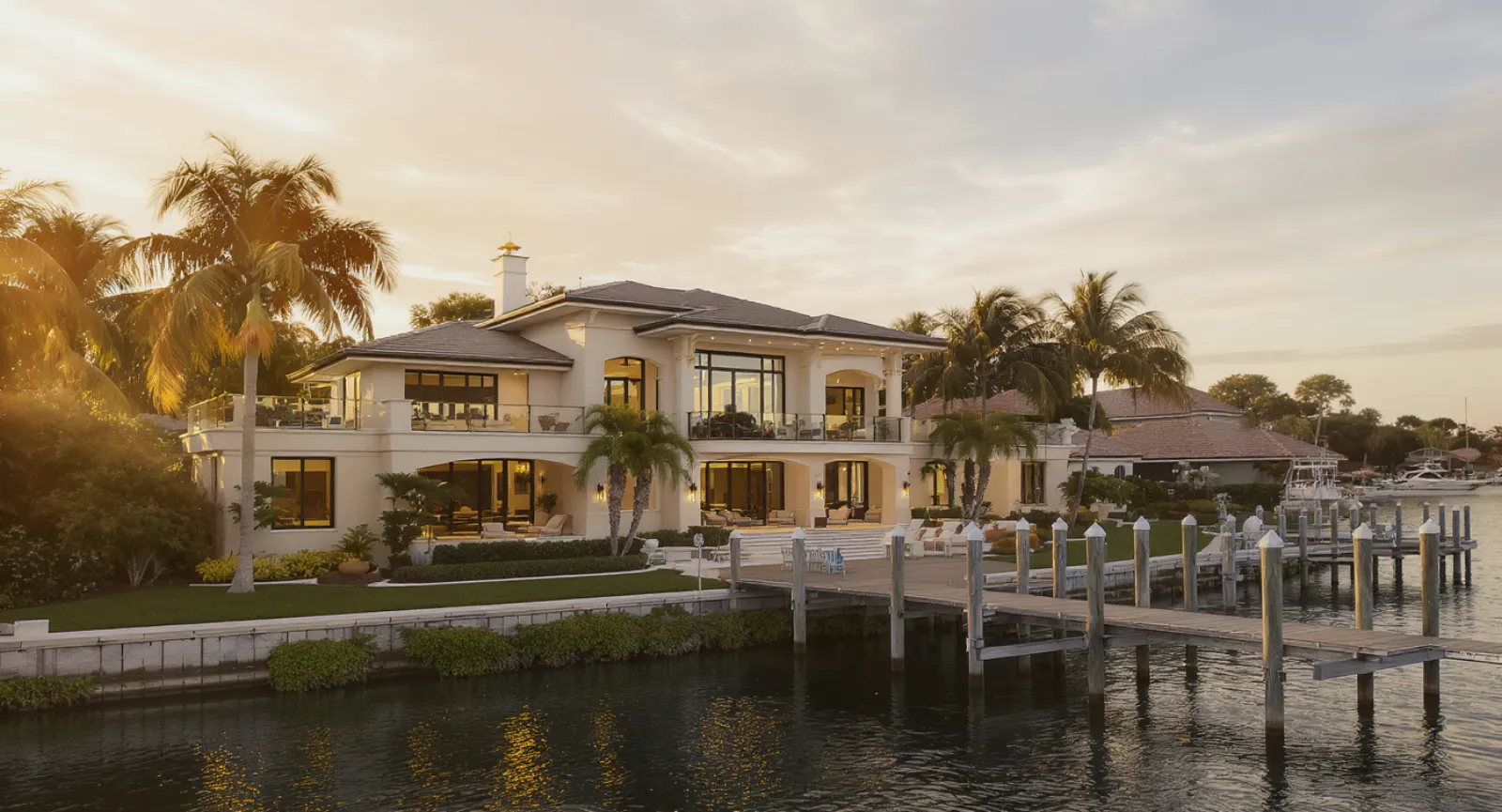
Building Custom Homes in Tampa
From Davis Islands bayfront to the live oaks of Hyde Park, Tampa is a city of distinct neighborhoods — each with its own architecture, its own review boards, and its own flood map. We build for that specificity.
Tampa rewards builders who know it block by block. A home in Hyde Park answers to a historic review board; a lot on Davis Islands answers to the base flood elevation; a teardown in Palma Ceia answers to wind code written for 150-mile-an-hour gusts. Carapezza has spent four decades building and restoring homes across Greater Tampa Bay, and we treat each South Tampa neighborhood as the particular place it is — not a pin on a map. This is how we approach custom homes and high-end remodels in the City of Tampa.
Why Tampa Is Different
A city built one neighborhood at a time.
Most cities you can build in with a general playbook. Tampa isn't one of them. South Tampa alone runs from man-made islands ringed by seawall to brick-paved historic streets where the tree canopy is older than the building code. The difference between a project that goes smoothly and one that stalls for months usually comes down to whether the builder understood, on day one, which set of rules the lot actually lives under — flood, historic, wind, or all three at once.
We build and remodel high-end homes in Tampa's most established neighborhoods — the waterfront enclaves of South Tampa, the historic districts, the gated golf communities. Our work tends to share a few traits: it respects the architectural character of the street it sits on, it's engineered for Tampa's hurricane and flood reality rather than retrofitted for it later, and it's built to a finish standard that holds up next to homes worth well into seven figures. The recent surge in South Tampa teardown-and-rebuild activity has been good for us precisely because that math — an aging, non-elevated house on a valuable lot — is exactly the problem we're built to solve.
Where We Build
The Tampa neighborhoods we know best.
Each of these comes with its own character and its own constraints. Knowing them before design starts is half the job.
Davis Islands
Tampa's crown-jewel waterfront — man-made islands with seawall living, a yacht club, and its own residential airfield at Peter O. Knight. Largely VE/AE flood zones, so new homes here are elevated by design.
Hyde Park
Historic, walkable, and tree-lined — and governed by an Architectural Review Commission for exterior work. The district expanded in January 2023, bringing roughly 184 more buildings under historic review.
Bayshore Beautiful
Directly off the 4.5-mile Bayshore Boulevard greenway, with larger lots and a premium waterfront address. Much of it sits in coastal flood zones where elevated construction is the rule.
Palma Ceia
Gated golf and country-club living with a strong Mediterranean architectural character. A favorite for detached custom homes that need to sit comfortably among established estates.
Beach Park & Beach Park Isles
Waterfront living with quick Westshore access, private docks, and an active custom-home market. Like the rest of the coastal South Tampa map, much of it is flood-zone regulated.
Culbreath Isles
A small, exclusive waterfront enclave where private docks are standard. Tight, premium lots that reward a builder who understands seawall and flood-zone construction.
Sunset Park
Upscale South Tampa with a high entry point and a steady appetite for new and rebuilt custom homes. Coastal proximity means flood and wind design are front-and-center.
Avila
A gated, 900-acre ultra-luxury community with a Jack Nicklaus golf course and an estate-scale price ceiling. Architectural review by the community sits alongside the city's own requirements.
New Tampa
Master-planned, suburban, and gated — golf-course subdivisions and a broader range of lot sizes. A different building context from coastal South Tampa, with its own HOA and design considerations.
We also build in New Tampa's master-planned subdivisions, the golf-course lots of Golfview, and the urban infill around Harbour Islandand the SoHo corridor. If your neighborhood isn't listed, it doesn't mean we don't work there — it means we should talk about what makes your particular street tick.
Codes & Climate
Hurricane, flood, and historic — Tampa's three constraints.
Building in Tampa means designing to the Florida Building Code, 8th Edition, which took effect at the end of 2023 and pulls in the ASCE 7-22 wind-load standard. In practical terms, South Tampa sits in a wind-design zone in the neighborhood of 150–160 mph, and much of it falls inside the Wind-Borne Debris Region, where the rules are stricter still. That drives real decisions: impact-rated windows and doors (or a tested shutter system), reinforced roof-to-wall connections, and a structural design that assumes the storm, rather than hoping to avoid it.
The second constraint is water. FEMA maps much of waterfront South Tampa — Bayshore, Davis Islands, Beach Park, Culbreath Isles — into the AE and VE flood zones. VE is the coastal high-hazard zone, where wave action is a factor and the lowest floor must sit on an elevated foundation set to the base flood elevation (BFE) plus the freeboardthe local code requires — commonly a couple of feet above BFE. An Elevation Certificate, prepared by a licensed surveyor or engineer, documents the finished height for both the city and your insurer.
The third constraint applies only in pockets, but where it applies it governs everything: historic review. In the Hyde Park Historic District, any exterior alteration visible from the street goes before an Architectural Review Commissionthat evaluates the work against the Secretary of the Interior's Standards for the treatment of historic properties. The district was expanded in January 2023, pulling roughly 184 more buildings under that review — so a house that wasn't historically regulated a few years ago may be now.
We confirm the codes for your specific lot
Permitting
Working through City of Tampa Construction Services.
Most residential permitting in the city flows through Construction Services and the Accela Citizen Access portal. Knowing the path keeps a project moving.
- 01
Site & zone review
Before design, we confirm the flood zone, base flood elevation, wind-exposure category, and whether the lot falls inside a historic district — the constraints that shape everything downstream.
- 02
Design to code
Plans are drawn to the Florida Building Code 8th Edition and ASCE 7-22, with the elevated foundation, impact-rated openings, and structural connections the lot requires built in from the start.
- 03
ARC review (if historic)
For exterior work in the Hyde Park Historic District, the project goes before the Architectural Review Commission against the Secretary of the Interior's Standards — planned in parallel with the building permit, never as an afterthought.
- 04
Permit submittal
We assemble and submit the package through City of Tampa Construction Services via the Accela Citizen Access portal, coordinating Hillsborough County for flood and coastal review where it applies.
- 05
Review & corrections
We manage the back-and-forth with reviewers, answering comments promptly so the clock keeps moving rather than restarting on incomplete submittals.
- 06
Build & certify
Once permitted, we build — and on flood-zone projects we close out with an Elevation Certificate documenting the finished height for the city and your insurer.
Single-family and duplex permits in the city go through City of Tampa Construction Services, while flood and coastal review involves Hillsborough County. A simple, like-for-like permit can clear quickly; a full new-construction package — especially in a flood zone or a historic district — is a multi-stage review that can run from several weeks to several months depending on completeness and complexity. In a Hyde Park exterior project, the Architectural Review Commissionstep runs alongside the building permit and has to be planned for, not discovered late. Our job is to assemble a complete package the first time so the review clock isn't restarting on corrections.
Permit timelines move — we plan to the real one
Coastal & Flood-Zone Building
Davis Islands, Bayshore, and the elevated-rebuild math.
On the waterfront, elevated construction has gone from the exception to the norm. A non-elevated home in a VE or AE zone now carries flood-insurance costs steep enough to reshape the buy-versus-build decision, and that economics — an aging house on a premium Davis Islands or Bayshore lot — is driving a wave of teardown-and-rebuild projects across South Tampa. Buyers increasingly want the elevated, code-current home rather than the inherited insurance problem.
When we build new on a flood-zone lot, the elevated foundation is designed in from the start: the living space sits above BFE plus freeboard, the ground level becomes non-habitable parking or storage, and the whole structure is engineered for both the wind and the water. When the project is a remodel of an existing home that has taken flood damage, a different rule can come into play — the FEMA 50% (“substantial damage”)threshold — which can require the entire home to be brought up to current flood code, elevation included. That's a specialty of ours, and it deserves its own conversation.
In a flood zone? Start with home elevation.
Why Carapezza in Tampa
We've been building across Greater Tampa Bay since 1989 — long enough to have worked through several editions of the building code, two major hurricane seasons in a single recent year, and the steady tightening of flood and wind standards that now defines coastal construction here. That history matters in Tampa specifically, because so much of building well in this city is about knowing what the lot will demand before you draw the first line: which flood zone, which wind exposure, whether Hyde Park's review board has a say, how the City of Tampa's permitting path actually runs.
We're a family-owned general contractor, not a volume builder. On a Davis Islands bayfront home or a Hyde Park restoration, that means one team accountable from the flood-zone and code review through design, permitting, the build, and the finish — with the craftsmanship standard you'd expect from a custom-home company rather than a production one. If you have a Tampa lot, a tired house on a good street, or a flood-damaged home you're deciding what to do with, we'll give you a straight read on what's possible — specific to your address, not a brochure.
Questions
Building in Tampa — FAQ
Does it make sense to tear down and rebuild in South Tampa?+
Often, yes. On a premium lot — much of 33629 and the surrounding South Tampa waterfront — an aging, non-elevated home can carry flood-insurance costs and code shortcomings that make a clean elevated rebuild the better long-term value, and buyers increasingly prefer the new code-current home. The math depends on your specific lot, the existing structure, and the flood zone, so we walk it with you for your actual address rather than a rule of thumb.
What does it take to build in a flood zone on Davis Islands or Bayshore?+
Much of Davis Islands and Bayshore falls in FEMA's VE or AE flood zones. That means an elevated foundation with the lowest floor set to the base flood elevation plus your required freeboard (commonly a couple of feet above BFE), impact-rated windows and doors for the wind code, and an Elevation Certificate prepared by a surveyor or engineer to document the finished height. We confirm your exact zone and BFE before design and engineer the home for both the water and the wind.
Do I need historic district approval to remodel my Hyde Park home?+
If your home is in the Hyde Park Historic District and the work changes the exterior in a way that's visible from the street, yes — it goes before the city's Architectural Review Commission, which reviews against the Secretary of the Interior's Standards. The district was expanded in January 2023, so a property that wasn't regulated a few years ago may be now. We confirm whether your address is in the district and build the ARC review into the schedule from the start.
What's the typical permit timeline for a new home in the City of Tampa?+
It varies with the project and the current city and county workload. A simple, like-for-like permit can clear quickly, while a full new-construction package — especially in a flood zone or a historic district — is a multi-stage review that can run from several weeks to several months. Tampa's permit volume has risen sharply in recent years, which affects timing. We assemble a complete submittal to avoid correction cycles and give you a realistic, staged schedule for your specific project.
What makes a Tampa home hurricane-resistant, and does it cost more?+
Tampa homes are designed to the Florida Building Code 8th Edition and the ASCE 7-22 wind standard, with South Tampa generally in a 150–160 mph wind-design zone and much of it in the stricter Wind-Borne Debris Region. In practice that means impact-rated windows and doors (or a tested shutter system), reinforced roof-to-wall connections, and a structure designed for the storm. It does add cost versus minimum-spec building, but it's not optional here — and it pays back in resilience and, often, in insurance treatment. We give you the real numbers for your design.
How does architectural review work in gated communities like Avila?+
Communities like Avila run their own architectural review on top of the city's requirements — they evaluate design, materials, scale, and how a home fits the community's character before you can build. It's a separate approval track from the City of Tampa permit, with its own submittal and timeline. We've worked through community design review and coordinate it alongside the city permitting so the two don't collide.
Should I build in New Tampa or South Tampa?+
They're different building contexts. South Tampa is established, walkable, and largely coastal — premium lots, flood and wind design front-and-center, and in places historic review. New Tampa is master-planned and suburban, with gated subdivisions, golf, a broader range of lot sizes, and HOA design rules rather than flood-zone constraints. The right answer depends on the lifestyle you want and the lot you can secure; we build in both and can lay out the trade-offs honestly.
What's the difference between building on Davis Islands, Culbreath Isles, and Beach Park?+
All three are waterfront South Tampa, but they're not interchangeable. Davis Islands is the most prominent — larger, with a yacht club and a residential airfield. Culbreath Isles is a small, exclusive enclave where private docks are standard. Beach Park (and Beach Park Isles) pairs waterfront living with quick Westshore access. Each has its own lot sizes, seawall and dock conditions, and flood-zone particulars, all of which shape the design and the budget. We assess your specific lot before recommending an approach.
Carapezza Custom Homes
Have a Tampa lot or a home in mind?
Tell us the neighborhood and the vision. We'll walk the flood zone, the codes, and the review process for your specific address — before you're committed to anything.