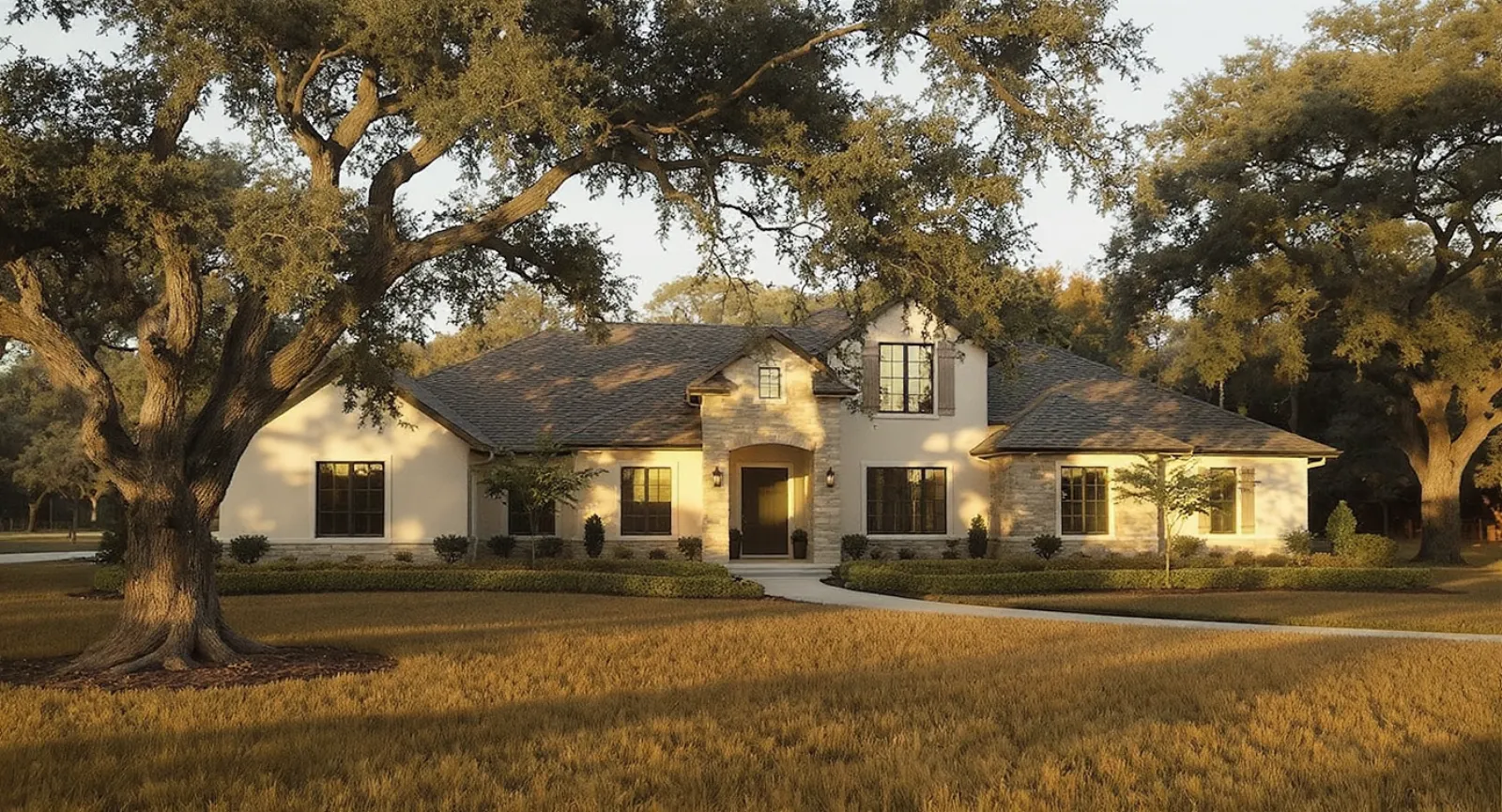
Custom Homes
Build on Your Own Lot in Tampa Bay
Already own the land — or have your eye on a parcel? We build a genuine custom home on your lot, engineered to what your site actually demands. This is home turf for us, especially on Plant City acreage and estate lots.
Building on land you own is one of the most rewarding ways to get a custom home — and one of the most site-specific. When you already have the lot, the home has to answer to that exact piece of ground: its zoning, its utilities, its soil, its flood status, and how you get equipment to it. That's very different from a builder's catalog plan dropped on a subdivision lot. As a state-licensed Florida building contractor and design-build custom home builder, Carapezza handles the whole path — from a feasibility read on your parcel through design, permitting, and construction — so your land becomes the home you actually want.
What This Actually Means
A true custom home on your land — not a stock plan on your lot.
“On your lot” means different things to different builders. For a production builder, it usually means choosing from a fixed set of floor plans and dropping one onto your land with minimal changes. That's fine for some lots — but it ignores what makes building on your own property worth doing. A real build-on-your-lot custom home starts with the land and designs the house to it: the views, the slope, the trees, the way the sun moves, and the rules that come with the parcel.
That's how we work. Our on-site design architect shapes the home around your lot and your life, not around a catalog. It matters most on the kind of land Tampa Bay still has in reach — acreage and estate lots around Plant City, Valrico, and Lithia, where the whole point is a home that belongs to its setting.
Read the Land First
What your lot has to tell us before we design.
Every parcel comes with a set of facts that shape — and sometimes limit — what can be built on it. We check these early, before you invest in design, so there are no expensive surprises later.
Zoning & setbacks
What the parcel is zoned for, how many homes it allows, the required setbacks and lot coverage, and — on old agricultural land — any lot-split or conversion rules. This defines the buildable envelope before a line is drawn.
Utilities: city or well & septic
Is the lot on municipal water and sewer, or does it need a private well and a septic system? Acreage builds usually mean the latter, which brings its own design, permitting, and cost — and makes soil and water-table testing essential.
Flood zone & elevation
We pull the FEMA flood designation. Where a lot sits in a flood zone, the home is elevated to the base flood elevation plus your county's freeboard, documented with an Elevation Certificate — inland lots often carry far less exposure than coastal ones.
Soils, grading & drainage
Florida's sandy soils, seasonal high water table, and low-lying pockets near creeks and rivers drive foundation design and site grading. Real drainage engineering here is what keeps water moving away from the home year-round.
Access & site work
How equipment reaches the site, where the driveway and utility runs go, and what clearing or fill the lot needs. On rural land this site work is a real part of the project, planned alongside the home — not an afterthought.
Easements, impact fees & the rest
Recorded easements, impact and connection fees, tree protections, wetland setbacks, and HOA architectural review where it applies. The unglamorous details that decide whether a plan is actually buildable on your parcel.
We check feasibility before you fall for a plan
Paying for the Build
How financing works when you already own the land.
Owning your lot outright can be a real advantage when it comes to financing. Most build-on-your-lot custom homes are funded with a construction-to-permanent loan— a single loan that covers construction in draws as the home is built, then converts to a standard mortgage at completion. When you already own the land, its value can often serve as part or all of your down payment or equity in that loan, which can reduce the cash you need to bring to closing.
We're not lenders, and every situation is different, so we won't pretend to quote your terms. What we can do is point you toward lenders experienced with custom construction in Tampa Bay and help you understand how a draw schedule works alongside the build, so the money and the construction stay in step. Talk to your lender about how your lot's equity factors in — it's often better news than owners expect.
How We Work
From your parcel to your keys.
- 01
Parcel feasibility
We pull your lot's zoning, utilities, flood status, easements, and constraints and give you an honest read on what's realistic — before you invest in design.
- 02
Design & architecture
Our on-site design architect shapes the home around your specific lot — its views, slope, trees, and orientation — and the way you actually want to live.
- 03
Engineering & site plan
Plans are engineered to current Florida Building Code and paired with a site plan covering foundation, grading, drainage, and — on acreage — well, septic, and access.
- 04
Permitting
We assemble and submit the permit package to the right authority — the county or city for your parcel — plus any flood, environmental, or HOA review the lot requires.
- 05
Site work & foundation
We clear and prep the site, run utilities or install well and septic, and pour a foundation engineered for your soil and flood elevation.
- 06
Construction & move-in
Our crews build from foundation to finish to one custom-home standard, with regular walkthroughs, and hand you the keys after a final walk of the punch-list.
Timelines vary with the lot and the home — an acreage build on well and septic carries more site work and permitting than a build on a serviced suburban lot. Most custom homes run roughly 12–18 months from design approval to move-in, with feasibility and permitting adding lead time before construction starts. We give you a realistic, staged schedule for your specific parcel rather than a number designed to sound good.
Why build-on-your-lot is home turf for us
Building on land the owner already holds is a big part of what Carapezza has done across Greater Tampa Bay since 1989 — and it's especially where our Plant City roots pay off. Plant City and eastern Hillsborough are among the last places in the region where a genuine custom home on real acreage is still within reach, and we know that ground: the agricultural-estate zoning, the well drillers and septic installers who do honest work, and the county desks that review rural builds. We handle the whole job under one roof — feasibility, design, engineering, permitting, site work, and construction — so your lot becomes the home you pictured, built right.
If you own a lot or are weighing one, that's exactly the conversation to have first. Send us the parcel and we'll tell you straight what it can do. For more on how these builds work in Florida, our guide to build-on-your-lot construction digs deeper.
Questions
Build on Your Lot — FAQ
I already own a lot — can you build a custom home on it?+
Yes — that's exactly what build-on-your-lot means, and it's a core part of what we do across Greater Tampa Bay, especially on acreage and estate lots around Plant City. We start with a feasibility read on your specific parcel — zoning, utilities, flood status, and constraints — then design and build a true custom home shaped to that land, not a stock plan dropped onto it.
What if I haven't bought the land yet?+
We're glad to look at a parcel before you buy. A feasibility read up front — zoning, whether it's on city utilities or will need well and septic, flood designation, access, easements, and impact fees — can save you from buying a lot that's harder or costlier to build on than it looks. It's one of the most valuable things we do, and it's better done before closing than after.
Does my lot need a well and septic system?+
It depends on whether the parcel is on municipal water and sewer. Many acreage lots around Plant City, Valrico, and Lithia are not, which means a private well for water and a septic system for wastewater — both requiring professional design given the area's seasonal water table and soils. We confirm your lot's utility situation during feasibility and design and permit the well and septic as part of the project.
How does financing work if I already own the land?+
Most build-on-your-lot homes are funded with a construction-to-permanent loan, which covers construction in draws and then converts to a mortgage at completion. When you already own the lot, its value can often serve as part or all of your equity in that loan, which can reduce the cash you bring to closing. We're not lenders, but we can point you toward ones experienced with custom construction and explain how the draw schedule works alongside the build.
Can you build on agricultural or rural land?+
Often, yes. Agricultural-estate zoning in eastern Hillsborough generally permits a single-family home per qualifying parcel, and some of the best homesites around Plant City are former strawberry fields and pasture. There can be lot-split rules, setbacks, and utility considerations in converting rural land to a residence, so we evaluate your specific parcel and walk you through what's possible before you commit.
How is building on my lot different from a production builder's 'on your lot' program?+
A production builder's version usually means choosing from a fixed set of floor plans and placing one on your land with limited changes. Our build-on-your-lot is genuine custom design-build: our on-site architect shapes the home around your specific parcel — its views, slope, trees, and rules — and the way you live. On acreage and estate lots, where the setting is the whole point, that difference is everything.
What does it cost to build on my own lot?+
It depends heavily on the lot and the home — an acreage build with well, septic, driveway, and drainage is a different project than a build on a serviced suburban lot, and finish level moves the number further. We don't publish a flat per-square-foot price because it wouldn't hold up. We give you a real, parcel-specific estimate after we've seen the land.
Our Disciplines
Start Here
Carapezza Custom Homes
Have a lot — or looking at one?
Send us the address or the parcel. Before you commit, we'll give you an honest read on what it takes to build the home you want on that specific piece of land.