Service Areas · Pinellas County
Custom Home Builder in Clearwater
Barrier-island estates, Intracoastal waterfront, and historic in-town lots — Clearwater is one of the most demanding places to build well in Tampa Bay. Here's how we do it right.
Clearwater is a coastal market in the truest sense. Build on Clearwater Beach, Sand Key, or Island Estates and the water isn't a view amenity — it's the single biggest factor shaping your foundation, your floor elevation, your permits, and your budget. After Hurricanes Helene and Milton put surge into homes that had stood dry for decades, the gap between a builder who understands Pinellas coastal construction and one who doesn't became very expensive. As a state-licensed Florida building contractor building custom homes across Greater Tampa Bay since 1989, Carapezza brings the coastal engineering, the flood-code fluency, and the finish quality these addresses demand.
Building in Clearwater
A premier coastal custom market — with rules to match.
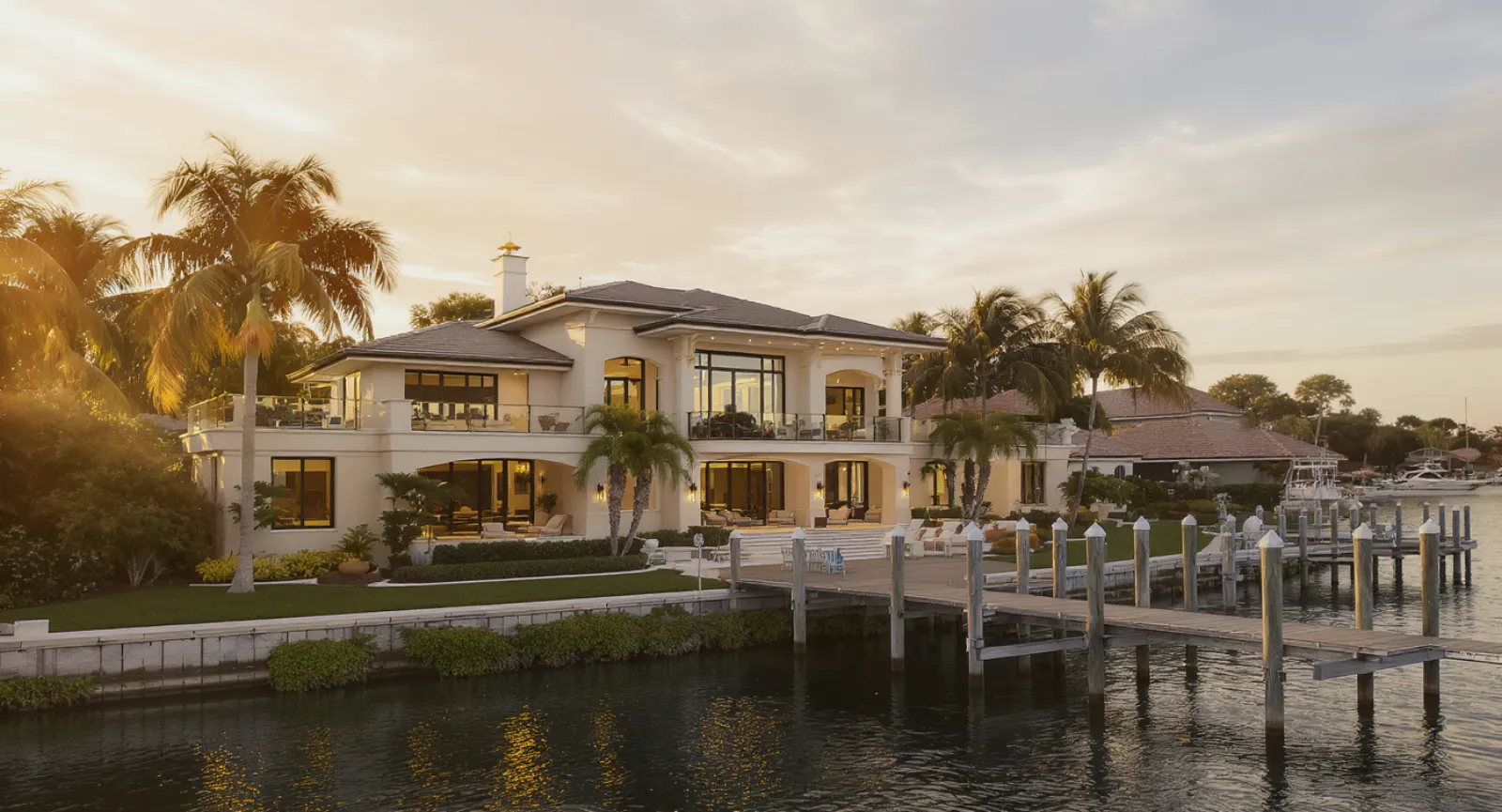
Clearwater anchors the Gulf side of Pinellas County, and its most sought-after addresses sit on or beside the water: the barrier islands of Clearwater Beach and Sand Key, the dock-lined canals of Island Estates, the oak-shaded historic streets of Harbor Oaks, and the Mediterranean luxury enclaves of neighboring Belleair. This is a market where a waterfront lot can carry a price most homeowners would expect to spend on a finished house, and where the home that goes on it is held to coastal standards far stricter than anything inland.
That combination — high land value and high construction complexity — is exactly why builder selection matters more here than almost anywhere in Tampa Bay. A slab-on-grade approach that works fine in Plant City is often illegal on Clearwater Beach. A like-for-like repair on Sand Key can quietly trigger a full elevation retrofit. The right partner is one who knows the difference before the first shovel, not after the first inspection. Carapezza builds and rebuilds across Clearwater's full range, from elevated beachfront contemporaries to historic in-town renovations, and brings the same custom-home standard to all of it.
Where We Build
Clearwater's custom-home neighborhoods.
Each enclave carries its own character, price range, and construction reality — from barrier-island flood code to historic-overlay design review.
Clearwater Beach
The iconic Gulf barrier island and one of the top-ranked beaches in the country. Beachfront and near-beach lots carry a premium and sit in the most restrictive flood and coastal-construction zones — elevated, piling-founded homes are the rule, not the exception.
Sand Key
A quieter barrier island between the Gulf and the Intracoastal, known for exclusive waterfront homes and condos. Like Clearwater Beach, much of it sits seaward of the coastal construction control line, which shapes everything from foundation to glazing.
Island Estates
An upscale residential island where nearly every home has water access and many have deep-water docks. Boat-dock living and Intracoastal views define the value here — and seawall, dock, and flood considerations define the build.
Harbor Oaks
Clearwater's first upscale community, dating to the 1910s, with historic Colonial Revival, Mediterranean, and Craftsman estates under oak canopy. A historic-preservation overlay means new work and major renovations go through design review.
Belleair & Belleair Beach
An exclusive Mediterranean and Spanish-style luxury enclave adjacent to Clearwater, with ultra-high-end waterfront on pockets like Belleview Island and Prickly Pear Point. The Town of Belleair permits separately from the City of Clearwater.
Countryside & inland Clearwater
Inland and golf-community neighborhoods where flood exposure is lower and slab construction is often appropriate. Here the focus shifts from coastal engineering to the design, finish, and livability of a true custom home.
We also build in the surrounding waterfront communities — Dunedin's Intracoastal neighborhoods to the north, and the Belleair Shores and Bluffs strip along the Gulf. Wherever your lot sits, the first question we ask is the same one the county asks: where is it relative to the water, and what does that require?
Codes & Climate
What coastal Pinellas construction actually demands.
Clearwater builds to the Florida Building Code, and on the coast that code is unforgiving by design. The most consequential factor is your FEMA flood zone. Beachfront and barrier-island lots typically fall in a VE zone— the high-hazard velocity zone where storm surge arrives with breaking waves — which is the most restrictive designation and generally mandates an open, piling-founded foundation with the living space raised well above the base flood elevation. Intracoastal and inland-waterfront lots more often sit in an AE zone (high-hazard, non-velocity), while higher inland ground may fall in zone X with minimal flood requirement. Base flood elevations on the beach commonly run into the double digits in feet above the NAVD88 datum.
On top of the flood map sits the Coastal Construction Control Line (CCCL)— a state line drawn by the Florida Department of Environmental Protection that marks where 100-year storm effects are expected. Build seaward of it — as much of Clearwater Beach, Sand Key, and waterfront Island Estates does — and you enter a world of enhanced permitting, mandatory coastal-engineering review, and material and siting restrictions meant to protect both your home and the beach-dune system in front of it.
Wind is the other half of the coastal equation. Pinellas isn't formally inside Miami-Dade's High-Velocity Hurricane Zone, but its standards run close. Near the coast, homes are designed to a wind-borne debris standard with design speeds well above 130 mph, and impact-rated windows and doors are required on new construction. Even on a remodel, replacing more than a quarter of your windows can trigger a full impact-glazing retrofit. A high-performance envelope here isn't a luxury upgrade — it's the baseline for a home that survives the next storm intact.
Elevated piling foundations
Driven or drilled piles to bearing strata, with living space lifted above the flood — mandatory on beachfront and CCCL-seaward lots, and a meaningful resilience upgrade everywhere near the water.
Impact-rated envelope
Impact windows and doors, reinforced roof-to-wall connections, and a code-driven approach to wind-borne debris that meets coastal Pinellas wind standards.
Flood-resistant detailing
Flood-resistant materials and breakaway construction below the base flood elevation, with mechanical, electrical, and plumbing relocated above it.
A note on flood zones, elevations, and numbers
Permitting
Navigating Clearwater and Pinellas approvals.
Coastal lots can pass through three or four separate review tracks. Knowing the path keeps the timeline honest.
- 01
Zoning, flood & CCCL review
We confirm your parcel's zoning, FEMA flood zone, base flood elevation, and whether it sits seaward of the Coastal Construction Control Line — the facts that determine everything downstream.
- 02
Coastal-engineering & design
For CCCL-seaward and VE-zone lots, a licensed coastal engineer designs the piling foundation and elevation, and the plan set is prepared for Florida DEP coastal review where required.
- 03
City of Clearwater / Pinellas submittal
Building plans go through the City of Clearwater's development review and ePermitting, with Pinellas County handling coastal, flood, seawall, and mangrove items — or the Town of Belleair for those addresses.
- 04
Historic overlay (if applicable)
Lots inside Harbor Oaks or a similar historic district add a certificate-of-appropriateness review of design and materials before construction approval.
- 05
Permit issuance & build
Once all tracks clear, permits are issued and we build to the approved coastal, wind, and flood specifications, with inspections at each milestone.
- 06
Elevation certificate & closeout
For elevated homes, an elevation certificate documents the finished floor height for the county and your insurer, and we close out every permit on the file.
A straightforward inland Clearwater permit can clear in a couple of weeks. A coastal, flood-complex project — one involving CCCL review, seawall or mangrove considerations, and FEMA compliance — routinely runs longer, and a home inside Harbor Oaks or a similar historic overlay adds a certificate-of-appropriateness step on top of that. Belleair addresses are reviewed by the Town of Belleair rather than the City of Clearwater, which is its own process. We map the full approval path for your specific lot up front, so the schedule we give you reflects reality rather than a best case that never materializes.
The Flood Reality
The FEMA 50% rule and your beachfront remodel.
Here is the single most important thing to understand before you renovate a coastal Clearwater home. If your property sits in a flood zone and the cost of improvements or repairs reaches 50% or more of the structure's market value(the building, not the land) — counted cumulatively over a rolling 12-month window — the entire home must be brought into compliance with current flood code. On a barrier island, that almost always means elevating the lowest floor to the base flood elevation plus the freeboard your community requires, switching to flood-resistant materials below that line, and relocating mechanical systems above it.
For a beachfront remodel, this rule is a hidden budget multiplier. A substantial kitchen-and-bath project on an older Sand Key or Clearwater Beach home can quietly tip past the 50% threshold and convert a renovation into a full elevation retrofit costing far more than the original scope. After Helene and Milton flooded thousands of Pinellas homes, county floodplain offices issued substantial-damage determinations doing exactly this — and many homeowners found out mid-project. Understanding where you stand before you commit is the difference between a planned investment and an emergency.
Facing substantial damage? Elevation may be the path — and there's funding.
There's an upside to all of this stringency. A properly elevated, piling-founded, impact-glazed coastal home isn't just code-compliant — it's genuinely more resilient and, over time, often cheaper to insure once an elevation certificate documents its height. With sea levels rising on the Gulf coast and king-tide flooding already a regular event on the barrier islands, building above the flood is the future-proof choice, not merely the required one. We treat coastal resilience as part of the design, not a box to check.
Why Carapezza in Clearwater
Coastal Clearwater rewards a builder who can hold two things at once: the technical rigor of flood-code, CCCL, and high-wind construction, and the design sensibility a luxury waterfront home deserves. Carapezza brings both. As a licensed Florida general contractor building across Greater Tampa Bay since 1989, we manage the coastal engineer, navigate the City of Clearwater, Pinellas County, and — where it applies — the Town of Belleair and Florida DEP, and deliver a finished home that looks and lives like the address it sits on.
We're equally at home raising and rebuilding a flood-damaged barrier-island home, designing an elevated contemporary on a fresh Island Estates lot, or restoring a historic Harbor Oaks estate under design review. The through-line is honesty: we tell you what your flood zone really requires, what the 50% rule really means for your project, and what a coastal build on your lot will really cost — before you're committed, not after. That straight talk, backed by 35 years of building in this region, is what we bring to every Clearwater project.
Questions
Building in Clearwater — FAQ
Can I build a new home on Clearwater Beach or Sand Key?+
Often yes, but barrier-island lots like these usually sit seaward of the Coastal Construction Control Line and in a VE flood zone, which means enhanced permitting, mandatory coastal-engineering review, an elevated piling foundation, and material and siting restrictions. It's very buildable with the right team — it's just not a conventional slab build. We confirm your specific lot's CCCL and flood status before designing anything.
What is the FEMA 50% rule and how does it affect a beachfront remodel?+
If your home is in a flood zone and the cost of improvements reaches 50% or more of the structure's market value — counted cumulatively over a rolling 12-month period — the entire home must meet current flood code, which on the coast usually means full elevation to the base flood elevation plus freeboard. On older Clearwater Beach or Sand Key homes, a large remodel can quietly cross that line and convert a renovation into an elevation retrofit. Your county floodplain office makes the official call, and we help you understand where you stand before you commit.
Do I need elevated or piling construction in Clearwater, and what does it cost?+
On beachfront and CCCL-seaward lots, an open piling foundation with the living space raised above the flood is generally mandatory. Elsewhere near the water it's often a smart resilience choice even when not strictly required. Piling construction carries a meaningful premium over a slab because of the engineering and the driven or drilled piles involved, but it dramatically improves surge resistance and longevity. We give you a real number for your specific lot rather than a generic figure.
How long does permitting take in Clearwater?+
A straightforward inland permit can clear in roughly two to four weeks. A coastal, flood-complex project involving CCCL review, seawall or mangrove items, and FEMA compliance typically runs longer, and a historic-overlay lot adds a certificate-of-appropriateness step. Belleair addresses are reviewed by the Town of Belleair separately. We map your full approval path up front so the timeline is realistic.
What are the wind and hurricane requirements for building here?+
Coastal Pinellas builds to a wind-borne debris standard with design speeds well above 130 mph near the Gulf. Impact-rated windows and doors are required on new construction, and on a remodel, replacing more than about a quarter of your windows can trigger a full impact-glazing retrofit. Pinellas isn't formally in Miami-Dade's High-Velocity Hurricane Zone, but its standards run close, and we build the envelope to match.
Is Belleair a good place for a custom luxury home?+
Belleair and Belleair Beach are among the most exclusive enclaves near Clearwater, known for Mediterranean and Spanish-style estates and ultra-high-end waterfront on pockets like Belleview Island and Prickly Pear Point. It's an excellent fit for a custom luxury home if that character and price range suit you. Keep in mind the Town of Belleair handles its own permitting, separate from the City of Clearwater — something we manage as part of the project.
What makes Island Estates unique to build in?+
Island Estates is an upscale residential island where nearly every home has water access and many have deep-water docks with direct Intracoastal and Gulf boat access. That dock-and-seawall lifestyle is the draw, and it shapes the build: seawall condition, dock permitting, and the parcel's flood zone all factor into the design alongside the home itself. We coordinate those waterfront elements as part of a single custom-home plan.
My Clearwater home flooded in Helene or Milton — what are my options?+
If repairs push your home past the FEMA 50% threshold, you'll likely need to bring it into full flood compliance, which on the coast usually means elevating it. The good news is that state and federal programs exist to help fund elevation for qualifying homes. Our Home Elevation and Elevate Florida page walks through the 50% rule, the lift, and the funding in detail — and we can review your specific situation and any substantial-damage determination with you.
Do you build inland in Clearwater, or only on the water?+
Both. Inland and golf-community neighborhoods like Countryside have lower flood exposure, where conventional slab construction is often appropriate and the focus shifts to design, finish, and livability. We build true custom homes across all of Clearwater — from elevated barrier-island contemporaries to inland family homes — with the same standard either way.
Carapezza Custom Homes
Planning a coastal build or rebuild in Clearwater?
Let's walk your lot, confirm your flood zone and CCCL status, and give you a realistic picture of what it takes to build it right — before anyone draws a plan.