storm restoration
Rebuild or Renovate? The 50 Percent Rule on the Pinellas Beaches
How the FEMA 50 percent rule decides whether a storm-damaged Pinellas beach home gets repaired or torn down and rebuilt raised, and who makes that call.
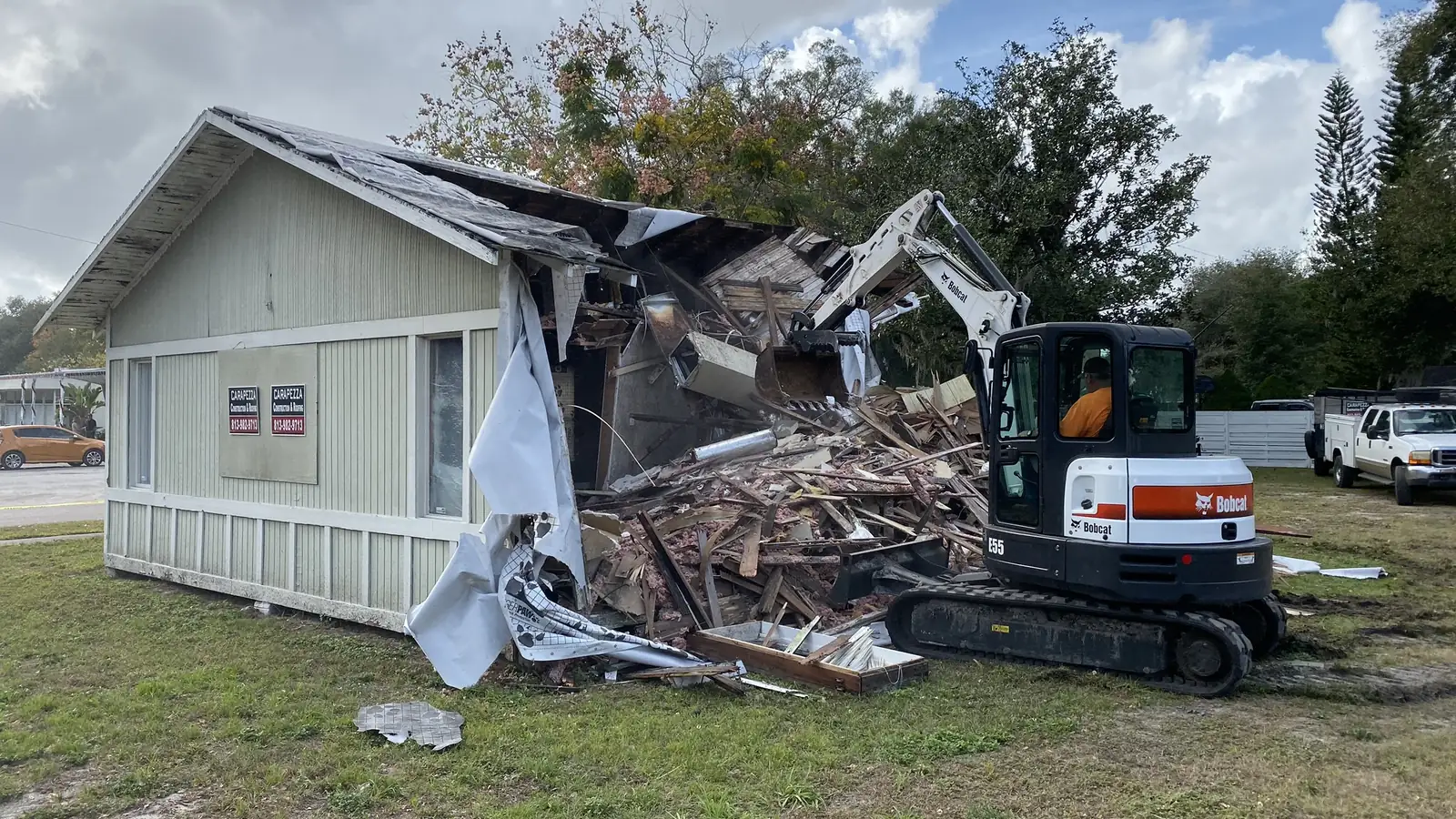
If your beach house took on water in 2024 and the repair estimate is creeping toward half of what the building itself is worth, you are looking at the decision the 50 percent rule forces: patch it back the way it was, or take it down and rebuild it raised. The rule is what makes that a real fork instead of a preference. Cross the threshold and repairing the house the way it stood is no longer an option your permit office can approve.
It gets misunderstood constantly, usually in ways that cost people money. So here is what it actually says.
What the rule measures
The 50 percent rule compares the cost of the work to the market value of the structure before the work begins. Land is excluded, which is the single most important thing to understand on a barrier island. A Pass-a-Grille lot can carry most of the property's value while the 1960s block cottage sitting on it appraises for a fraction of the tax bill. That makes the denominator small, and a small denominator makes the 50 percent threshold easy to hit.
Two related terms do the work. Substantial damage is what happens to you: storm damage that would cost 50 percent or more of the structure's pre-damage value to repair. Substantial improvement is what you choose: a renovation, addition, or reconstruction whose cost hits the same ratio. The regulatory consequence is identical either way.
Everything goes into the numerator. Labor, materials, demolition, permit fees, design work, contractor overhead and profit. Not just the visible finishes. Owners who mentally price their project as "new drywall and a kitchen" are usually working from a number well below what the permit office will use.
Who makes the call
Your local floodplain administrator, together with the building official, in whatever jurisdiction issues your permit. FEMA writes the standard; it does not evaluate your house. That distinction matters on the Pinellas beaches, where the barrier islands are carved into separate municipalities. Pinellas County floodplain management handles unincorporated addresses and tells owners inside city limits to go to their city. Two houses four blocks apart can be reviewed by two different offices.
Value gets established one of two ways. The county accepts the Property Appraiser's "just value" for the structure, adjusted toward market value, or an independent appraisal by a state-certified appraiser using actual cash value, meaning replacement cost depreciated for age and condition.
That second option is where owners have room to push back. If the appraiser's number reads low, an independent appraisal can move the denominator, and a detailed line-item estimate from a licensed contractor can sharpen the numerator. Pinellas offers a reconsideration process for the pre-storm building value, with an appeal path behind it. None of this is a formality and none of it should be attempted from memory. Take the specific documents and deadlines up with the floodplain administrator whose name is on your determination letter.
What crossing the line triggers
Once a structure is substantially damaged or substantially improved, the whole building has to meet current flood requirements, not just the part you are touching.
For most Pinellas properties, that means raising the lowest floor to the base flood elevation plus freeboard. The Florida Building Code sets a statewide floor of BFE plus one foot, and local governments can require more. St. Pete Beach requires the lowest floor at BFE plus one foot or the design flood elevation, whichever is higher, but a list of named zoning districts is exempt from that extra foot and follows base flood elevation alone, and the Pass-a-Grille Overlay District is on that list. Do not assume the number you heard from a neighbor applies to your address, even inside the same city. Confirm it with the office reviewing your permit. Do not assume the number you heard from a neighbor in another city applies to your address. Confirm it with the office reviewing your permit.
In V zones, the coastal high hazard areas that take direct wave action, the requirements go further. The structure sits on piles or columns rather than a slab or stemwall, with embedment designed for scour. Enclosures below the elevated floor are limited to non-habitable uses and have to be built with breakaway walls that fail under wave load without turning into debris. Mechanical and electrical equipment moves up with the house.
This is the point where repairing the existing footprint often stops making sense. You are rebuilding the foundation and re-running every service anyway. Our substantial damage reconstruction and home elevation work both start from this determination, and which one fits usually depends on whether the existing structure is sound enough to be worth lifting.
Where the money comes from
Two programs matter, and neither is a blank check.
If you carry an NFIP flood policy and your community declares the home substantially damaged, Increased Cost of Compliance coverage provides up to $30,000 toward raising, relocating, or demolishing the structure to satisfy the local ordinance. It is adjusted separately from your flood damage claim. What it does not do is fund the rebuild, cover contents, or pay for anything past the compliance requirement. On a full raise it is a contribution, not a solution.
Elevate Florida, the state mitigation program run by the Division of Emergency Management, is the larger source. It funds structural elevation, mitigation reconstruction, wind mitigation, and acquisition, on a standard 75 percent federal and 25 percent homeowner cost share. Its first application window ran February 7 to April 11, 2025 and closed with more than 12,000 applications from 64 counties. It is not open now. Applications already submitted are working through review and FEMA approval into 2026. If a future window opens, the people who get funded will be the ones who already have damage documentation, valuations, and a defined project scope sitting ready.
The 49 percent strategy, and its trap
Plenty of owners deliberately scope work to land under the threshold. That is legitimate. It is also where people get caught.
Costs can be tracked cumulatively. A permit this spring and another this fall are not always evaluated in isolation, and jurisdictions differ on the window they apply. Three careful projects that each came in at 30 percent can add up to a substantial improvement determination on the third permit, at which point the full compliance requirement lands on a house you have already spent heavily on. Ask your floodplain administrator, in writing, how your jurisdiction accumulates costs before you plan a phased renovation.
There is a quieter problem too. A house repaired to 49 percent is a house still sitting at its original elevation, still rated at its original flood risk, and still exposed to the next surge. The money is spent and the underlying vulnerability is unchanged.
After Helene and Milton
Hurricane Helene in September 2024 and Milton weeks later in October pushed water through Pinellas neighborhoods that had gone decades without it. Substantial damage determinations followed across the beaches and the low-lying mainland, and Pinellas County has been explicit that permits arising from those storms are not exempt from the rules.
The practical effect is a slow reshaping of the barrier islands, house by house, as each damaged property either comes back raised or comes back the same and waits. Two years on, plenty of owners are still deciding.
Our role sits on the construction side of that decision. We work through the determination with you, price both paths honestly, and design and build whichever one you choose to current code. Carapezza has been building across Greater Tampa Bay since 1989, and the coastal work has changed more in the last two years than in the twenty before them.
Weighing a repair against a rebuild on a Pinellas coastal property? Get in touch and we will walk your property, review your determination, and lay out what each path actually involves.
Questions
Frequently Asked Questions
What is the FEMA 50 percent rule?+
If the cost to repair or improve a building in a flood hazard area reaches 50 percent or more of the structure's market value before the work, the whole building has to be brought into compliance with current floodplain rules. That usually means raising the lowest floor to the base flood elevation plus local freeboard. Land value is excluded from the calculation. Only the structure counts.
Who decides if my home is substantially damaged?+
Your local floodplain administrator does, working with the building official in the city or county that issues your permit. FEMA does not make the call on individual homes. In unincorporated Pinellas County the determination comes from county floodplain management; if your address is inside a city such as St. Pete Beach or Treasure Island, that city runs its own assessments and permitting.
Can I contest a substantial damage determination?+
Yes. Pinellas County has a process to request reconsideration of the pre-storm building value, and you can support it with a repair estimate from a licensed contractor or an appraisal from a state-certified appraiser. If reconsideration does not change the outcome, there is a further appeal path. Start with your floodplain administrator, because deadlines and required documents vary by jurisdiction.
How much does Increased Cost of Compliance coverage pay?+
NFIP flood policies include Increased Cost of Compliance coverage of up to $30,000 for a home the community has declared substantially damaged. It pays toward raising, relocating, or demolishing the structure to satisfy the local floodplain ordinance. It does not pay for the flood damage itself, that is your regular claim, and it will not fund upgrades beyond compliance.
Is Elevate Florida still taking applications?+
No. The state's residential mitigation program ran its first application window from February 7 to April 11, 2025 and closed it after more than 12,000 applications came in. Projects already in the pipeline are moving through review and approval. Anyone hoping for a future window should check the Florida Division of Emergency Management site directly rather than assume one is coming.
Our Disciplines
More Guides
Get Started